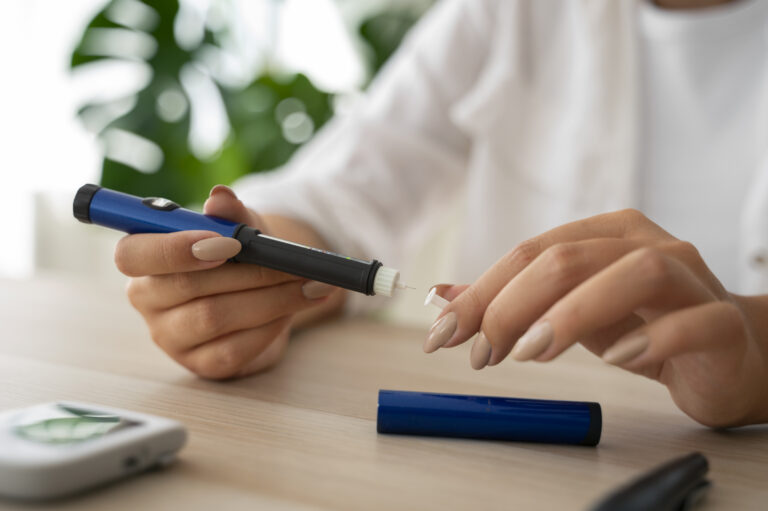
Injectable weight loss medications like Ozempic and Mounjaro have already changed how Canadians approach obesity treatment. But Retatrutide, a promising new drug currently undergoing clinical trials, could push results even further.
Retatrutide is a new injectable medication being developed by Eli Lilly. Known as a “triple agonist,” it targets three hormone receptors at once. In the first Phase 3 trial to report results, participants taking Retatrutide lost an average of 28.7% of their body weight. If those numbers hold up, Retatrutide could become the most effective weight loss medication available.
With approval for Retatrutide in Canada potentially arriving in mid-to-late 2027, now is a good time to recap what we know about the drug. In this comprehensive guide, we’ll cover everything Canadians should know about Retatrutide, including what the research shows so far, how much Retatrutide might cost, potential side effects, and more.
What Is Retatrutide?
Retatrutide, also known by its research name LY3437943, is a weekly injectable medication being developed by Eli Lilly (the same company behind Mounjaro). Like other medications in this class, it works by mimicking hormones your body naturally produces to regulate appetite and blood sugar.
What sets Retatrutide apart is that it’s a “triple agonist.” Current weight loss medications target either one receptor (GLP-1 alone, like Ozempic) or two receptors (GLP-1 and GIP, like Mounjaro). Retatrutide targets all three: GLP-1, GIP, and glucagon.
This triple agonist approach is why retatrutide is generating so much attention. Each additional receptor target has historically resulted in greater weight loss in clinical trials, and the early data for retatrutide suggest this trend is continuing.
How Does Retatrutide Work?
To understand why Retatrutide appears more potent than current options, it helps to look at what each of its three receptor targets does:
- GLP-1 (glucagon-like peptide-1) is the receptor targeted by medications like Ozempic and Wegovy. Activating GLP-1 receptors generally slows digestion, reduces appetite, and increases feelings of fullness. This is essentially the “brake” on calorie intake, as it makes you eat less by helping you feel satisfied sooner and for longer after meals.
- GIP (glucose-dependent insulinotropic polypeptide) is the second receptor. GIP works alongside GLP-1 to further improve insulin sensitivity and enhance weight loss. Research suggests that adding GIP to GLP-1 may also help buffer some of the nausea that comes with high-dose GLP-1 therapy, potentially allowing for more aggressive dosing.
- Glucagon is where Retatrutide breaks new ground. While GLP-1 and GIP primarily work by reducing how much you eat, glucagon activation seems to increase how much energy your body burns. Glucagon does this by promoting the breakdown of stored fat (lipolysis) and boosting metabolic rate through a process called thermogenesis. In simple terms, GLP-1 and GIP reduce the calories going in, while glucagon helps burn through the calories already stored.
The Triple-Agonist Impact
The triple agonist effect of Retatrutide is a significant shift. Previous weight loss medications focused almost entirely on appetite suppression. By adding an energy expenditure component, Retatrutide essentially works on both sides of the energy equation of weight loss—less intake and more output.
One important question with glucagon is whether its tendency to raise blood sugar creates problems. Clinical trial data so far has been reassuring, as the blood-sugar-lowering effects of the GLP-1 and GIP components appear to more than offset glucagon’s glucose-raising activity (in patients with Type 2 diabetes, retatrutide actually lowered blood sugar levels significantly).
An Overview of the Retatrutide Research
Eli Lilly is studying retatrutide through the TRIUMPH Phase 3 clinical trial program, which has enrolled more than 5,800 participants with conditions including obesity, Type 2 diabetes, obstructive sleep apnea, and knee osteoarthritis.
Below is a summary of the key findings in the Retatrutide research so far.
How Much Weight Might People Lose With Retatrutide?
The most striking data comes from the TRIUMPH-4 Phase 3 trial, which studied 445 adults with obesity and knee osteoarthritis. Over 68 weeks, participants on the highest dose (12 mg) lost an average of 28.7% of their body weight (approximately 71 lbs).
To put that in perspective, the best results from injectable semaglutide (Ozempic/Wegovy) average around 15% weight loss, while tirzepatide (Mounjaro) achieves roughly 20-22%. Retatrutide’s results represent a meaningful jump beyond both, approaching the degree of weight loss typically seen after bariatric surgery (25-30%).
It’s also worth noting that in an earlier Phase 2 trial, weight loss hadn’t significantly slowed at 48 weeks, suggesting that longer treatment periods may yield even greater results. The progression from 24.2% in that Phase 2 trial to 28.7% in Phase 3 at 68 weeks supports this.
Does Retatrutide Help With Other Health Conditions?
Beyond weight loss, the retatrutide research points to several secondary benefits.
- Osteoarthritis-Related Pain – In the TRIUMPH-4 trial, participants experienced a big reduction in knee pain scores, with more than 1 in 8 treated patients reporting being completely pain-free by the end of the study. This makes sense, given the combination of reduced load on joints from substantial weight loss and potential anti-inflammatory effects of the treatment.
- Fatty liver disease – In Phase 2 trials, over 85% of participants on the highest doses achieved complete resolution of liver fat accumulation. This positions retatrutide as a potential treatment for metabolic dysfunction-associated steatohepatitis (MASH), a growing concern in Canada.
A large-scale trial (TRIUMPH-OUTCOMES) regarding Retatrutide’s impact on cardiovascular and kidney outcomes is currently underway, though final results aren’t expected until 2029.
How Does Retatrutide in Canada Compare to Other Weight Loss Medications?
With several GLP-1 medications now available and in development, it helps to understand where Retatrutide in Canada fits.
Here’s how Retatrutide compares to the major options available to Canadians.
Retatrutide vs. Ozempic/Wegovy (Injectable Semaglutide)
Semaglutide targets GLP-1 only, achieving roughly 15% average weight loss in clinical trials. Retatrutide’s triple agonist approach nearly doubles that figure.
It’s worth noting that generic semaglutide is expected to arrive in Canadian pharmacies in mid-to-late 2026, which could make it a significantly more affordable option than Retatrutide. However, for patients with severe obesity or those whose weight loss plateaus on semaglutide, Retatrutide may offer the additional efficacy needed to reach their health goals.
Retatrutide vs. Mounjaro/Zepbound (Injectable Tirzepatide)
Tirzepatide is the closest current comparator, as it already targets two of Retatrutide’s three receptors (GLP-1 and GIP). Clinical trials show tirzepatide achieves approximately 20-22% weight loss, compared to approximately 29% with retatrutide. For a 250 lb patient, that difference translates to roughly an additional 16 lbs of weight loss.
Retatrutide vs. Orforglipron (Oral GLP-1)
Orforglipron is Eli Lilly’s other investigational weight loss drug (expected to be approved by Health Canada in late 2026 or early 2027). Interestingly, Orforglipron takes the opposite approach to retatrutide. Where Retatrutide pushes for maximum potency through triple agonism, Orforglipron prioritizes convenience as a daily pill with no injection or fasting requirements.
Considering that Orforglipron’s weight loss results are roughly half of retatrutide’s (12-15% of body weight vs up to 29%), it may be an ideal solution for patients seeking modest weight loss with maximum convenience. For those with significant obesity requiring aggressive treatment, Retatrutide may be the more effective tool.
Common Side Effects of Retatrutide
Like all GLP-1 medications, Retatrutide’s most common side effects are gastrointestinal: nausea, vomiting, diarrhea, and constipation. These tend to be dose-dependent and most pronounced during the early weeks of treatment when the dose is being gradually increased.
Clinical trials used a “start low, go slow” approach, beginning at 2 mg of Retatrutide and escalating every four weeks to manage retatritude side effects.
Additional Retatrutide Side Effects
The addition of glucagon receptor agonism introduces some Retatrutide side effects that are less common with existing GLP-1 medications.
- Skin sensitivity (dysesthesia) – In the TRIUMPH-4 trial, roughly 1 in 5 participants on the highest dose reported dysesthesia—an abnormal sense of touch that can cause numbness, tingling, or unusual skin sensitivity, sometimes described as a sunburn-like tenderness without visible rash. These events were generally mild and rarely led to stopping treatment. But this is a new Retatrutide side effect not seen in earlier Phase 2 trials and will be closely monitored in upcoming studies.
- Heart rate increases – Clinical trials have shown a dose-dependent increase in resting heart rate, peaking around 24 weeks of treatment before gradually declining. GLP-1 medications like Ozempic and Mounjaro are also known to raise heart rate slightly (2-4 beats per minute), but Retatrutide’s glucagon component may push this somewhat higher. An ongoing cardiovascular outcomes trial will help determine if this signal translates into any meaningful clinical risk, or whether the substantial cardiovascular benefits of major weight loss outweigh it.
As with all weight loss medications, if Retatrutide in Canada becomes a treatment option, your doctor will discuss side effects and risks of the medication.
When Will Retatrutide Be Available in Canada?
As of early 2026, Retatrutide is not approved by Health Canada. The drug is currently in late-stage Phase 3 trials, with seven additional studies expected to report results throughout 2026. A submission to Health Canada would likely follow in late 2026 or early 2027, with the standard review process taking approximately 300 days.
Based on current projections, Retatrutide could receive Health Canada approval in mid-to-late 2027, with commercial availability in Canadian pharmacies following shortly after.
How Much Will Retatrutide Cost in Canada?
Pricing for Retatrutide in Canada has not been announced. As a branded injectable from Eli Lilly, it’s expected to be priced at a premium.
For context, by the time Retatrutide launches, generic semaglutide (Ozempic) could be available for roughly $80-$100 CAD per month, while branded weight loss injectables like Mounjaro currently cost approximately $400+ per month.
Insurance coverage for weight loss indications is generally limited in Canada. Private plans may require prior authorization, while public provincial formularies are unlikely to cover Retatrutide in Canada for weight loss initially.
Retatrutide Canada FAQs
What is Retatrutide?
Retatrutide is an investigational weekly injectable weight loss medication developed by Eli Lilly. It’s a triple agonist that targets GLP-1, GIP, and glucagon receptors, making it potentially the most potent weight loss drug in development.
What is the Retatrutide dosage?
In clinical trials, retatrutide is administered as a weekly injection. Dosing starts at 2 mg and is gradually increased every four weeks, with the highest studied dose being 12 mg weekly.
Is Retatrutide available in Canada?
Not yet. Retatrutide is still in Phase 3 clinical trials and has not been submitted for Health Canada approval. Based on current timelines, Retatrutide could become available in Canadian pharmacies sometime in 2027.
Can you switch from Ozempic or Mounjaro to Retatrutide?
While there’s no specific switching study yet, Retatrutide targets the same GLP-1 and GIP receptors as these medications (plus glucagon). Clinically, it seems unlikely there would be a reason a patient couldn’t transition from a medication like Ozempic or Mounjaro to Retatrutide once it’s approved.
Where can I buy Retatrutide in Canada?
Retatrutide is not currently available for purchase in Canada. Any products sold online claiming to be Retatrutide are not approved by Health Canada and may not be safe. When the drug is eventually approved, it will be available by prescription through licensed Canadian pharmacies.
Should Patients Wait for Retatrutide or Get Treatment Now?
While Retatrutide’s clinical data is impressive, it’s likely still 18 months or more away from being available in Canada. With effective weight loss treatments like Ozempic or Mounjaro available right now, there’s unlikely to be a good reason for most people struggling with obesity to wait until Retatrutide is released to start treatment.
The first step in evaluating medical weight loss treatments is speaking with a suitably trained healthcare professional. A doctor can help you evaluate the treatment options currently available, which might be most suitable for your overall health situation and goals, and develop a strategy that includes lifestyle changes alongside any medication.
Speak With a Virtual Doctor About Weight Loss Treatment
Please note:
Walk In does not provide medical advice. The contents of this website, including text, graphics, images and any other material are intended for informational and educational purposes only and are not intended to substitute for professional medical advice, diagnosis or treatment. Although efforts are taken to keep any medical information on the website updated, we cannot guarantee that the information on our website is correct or reflects the most up-to-date medical information.
Please consult your physician for medical advice. Always seek the advice of a physician or other qualified healthcare provider with any questions regarding a medical condition. Never disregard or delay seeking professional medical advice or treatment because of something you have read on this website or on the internet.