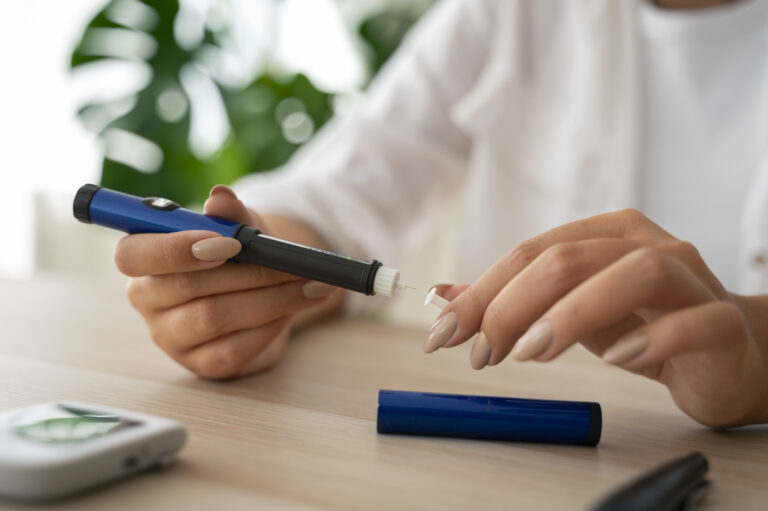
Injectable weight loss medications like Ozempic and Mounjaro have transformed how Canadians manage obesity and Type 2 diabetes. But for many people, weekly injections remain a dealbreaker.
That’s why Orforglipron, a new oral weight loss pill currently being tested by Eli Lilly, is generating so much attention. If approved, it would be the first oral GLP-1 medication that doesn’t require fasting (like Rybelsus). Presuming it lives up to the hype, Orforglipron in Canada could be a once-daily pill you can take with your morning coffee and toast, no needles required.
This article covers what Canadians should know about Orforglipron in Canada, what the research shows so far, and what it could mean for the future of medically-supported weight management.
What Is Orforglipron?
Orforglipron is an oral GLP-1 receptor agonist currently being developed by Eli Lilly (the same company behind Mounjaro). Like Ozempic and Mounjaro, it works by mimicking the GLP-1 hormone that your body naturally produces to regulate appetite and blood sugar. The key difference is that Orforglipron is a pill, not an injection.
What makes Orforglipron particularly noteworthy is its chemical structure. Existing GLP-1 medications like semaglutide (Ozempic, Wegovy) and tirzepatide (Mounjaro) are peptides— large, fragile molecules that are easily broken down by stomach acid. That’s why they’re typically administered as injections, allowing them to bypass the digestive system entirely.
There is already an oral form of semaglutide on the market (Rybelsus), but it comes with strict requirements. Patients must take it on an empty stomach with no more than 120 ml of water, and then wait at least 30 minutes before eating, drinking, or taking other medications. In practice, many people find this routine difficult to follow consistently, which can reduce the medication’s effectiveness.
Orforglipron takes a different approach. It’s a “small molecule” compound that isn’t degraded by stomach acid. This means it can be absorbed effectively regardless of whether you’ve eaten, removing any fasting requirements entirely.
How Does Orforglipron Work?
Orforglipron appears to work through the same core mechanisms as other GLP-1 receptor agonists. Once absorbed, it activates GLP-1 receptors in the body, which:
- Delays gastric emptying – meaning food stays in your stomach longer after a meal, helping you feel fuller for longer.
- Acts on appetite centers in the brain (specifically the hypothalamus) – to reduce hunger and increase feelings of satiety.
- Enhances glucose-dependent insulin secretion – which helps regulate blood sugar levels (particularly beneficial for people with Type 2 diabetes).
Where Orforglipron differs from injectable GLP-1s is in how it reaches those receptors. Because it’s a small molecule rather than a peptide, Orforglipron likely interacts with the GLP-1 receptor differently at a molecular level. But for patients, the practical outcome seems to be similar, with reduced appetite, lower calorie intake, and meaningful weight loss over time.
What Does the Research Show?
Eli Lilly has been studying Orforglipron through two major clinical trial programs:
- ATTAIN (focused on weight loss)
- ACHIEVE (focused on Type 2 diabetes).
Below is a summary of the key findings so far.
How Much Weight Can You Lose?
In the pivotal Phase 3 trial (ATTAIN-1), over 3,000 adults with obesity took Orforglipron daily for 72 weeks. Those on the highest dose or 36 mg lost an average of 12.4% of their body weight (roughly 27 lbs). Nearly 60% of participants on that dose lost at least 10% of their body weight, and about 40% lost 15% or more.
To put that in context, 12.4% weight loss from a daily pill is a significant achievement. It’s more than double what the current best oral option (Rybelsus at 14 mg) typically delivers. However, Orforglipron’s results fall short of the results seen with injectable options, with semaglutide studies averaging 15-17% weight loss and tirzepatide up to around 21%.
Does Orforglipron Help With Blood Sugar?
For people with both obesity and Type 2 diabetes (a group that typically finds weight loss more difficult) the results from Orforglipron were also encouraging. In the ATTAIN-2 trial published in The Lancet, participants on Orforglipron 36 mg lost an average of 10.5% of their body weight over 72 weeks, while also reducing their A1C (a key measure of blood sugar control) by an average of 1.8 percentage points. Separate diabetes-focused trials showed similar blood sugar improvements, with more than half of participants achieving an A1C of 6.5% or lower.
Can You Switch From an Injection to Orforglipron?
Perhaps the most compelling data for Canadians already on injectable GLP-1s comes from the ATTAIN-MAINTAIN trial, which tested whether patients could switch from injections to Orforglipron without regaining weight.
The results released in late 2025 were encouraging. Participants who switched from semaglutide to Orforglipron maintained nearly all of their weight loss, with a negligible difference of just 0.9 kg after one year. Those switching from tirzepatide saw some weight regain (an average of 5.0 kg), but still maintained significantly more weight loss than those switched to a placebo.
This suggests a potential treatment approach where a patient could use an injectable for the initial “weight loss phase” and then transition to Orforglipron for long-term maintenance (essentially trading the needle for a daily pill once they’ve reached their goals).
How Does Orforglipron in Canada Compare to Other Weight Loss Medications?
With several GLP-1 medications now available (or on the horizon), it helps to understand where Orforglipron in Canada fits in. Here’s a quick comparison of the major options in the Canadian market:
Orforglipron vs. Ozempic/Wegovy (injectable semaglutide)
Injectable semaglutide is likely to offer greater weight loss (15–17%). Plus, with generic versions expected in Canadian pharmacies by mid-2026 following, it will likely be the more affordable option. However, Orforglipron wins on convenience, withno needles, no refrigeration, and no injection-site rotation.
Orforglipron vs. Mounjaro/Zepbound (injectable tirzepatide)
Tirzepatide remains possible the most potent weight loss medication available, with studies showing approximately 20% average weight loss. Orforglipron doesn’t seem able to compete on total weight loss outcomes, but may serve as an ideal maintenance option after an initial course of tirzepatide.
Orforglipron vs. Rybelsus (oral semaglutide)
This is the most direct comparison—pill vs. pill. Orforglipron appears to offer roughly double to triple the weight loss of current-dose Rybelsus (12.4% vs. 4–5%) and doesn’t require fasting. This makes Orforglipron a clear step forward for oral GLP-1 therapy.
Convenience vs. Cost
For many Canadians, the choice between Orforglipron and an injectable GLP-1 may come down to a trade-off between convenience and cost.
When Orforglipron eventually launches, generic injectable semaglutide will likely be available at a significantly lower price point. Patients who are comfortable with weekly injections may find a generic GLP-1 offers a more appealing treatment option in terms of efficacy vs. cost. While those who strongly prefer an oral option, or who are looking to transition off injections, may find Orforglipron worth the price.
Side Effects of Orforglipron
Like all GLP-1 receptor agonists, Orforglipron’s most common side effects are gastrointestinal.
Across clinical trials, the most frequently reported issues were:
- Nausea
- Vomiting
- Diarrhea
- Constipation.
Orforglipron side effects seem to be dose-dependent, tending to occur mainly during the initial weeks of treatment when the dose is being gradually increased.
Managing Orforglipron Side Effects
To manage side effects, the Orforglipron clinical trials used a step-wise dose escalation, starting patients at a low dose (3 mg) and increasing every four weeks until reaching the target dose of 36 mg. This “start low, go slow” approach is consistent with how other GLP-1 medications like Ozempic and Mounjaro are prescribed, and most patients find that side effects improve after the first 8-12 weeks.
Discontinuation rates due to side effects from Orforglipron ranged from 4% to 8% in clinical trials, which is broadly consistent with the injectable GLP-1 class.
Potential Safety Issues
One notable safety point is that an earlier competing oral GLP-1 from Pfizer (lotiglipron) was discontinued in 2023 due to liver toxicity concerns.
Eli Lilly has reported that no liver safety signal was observed across the Orforglipron trial program, and the extensive Phase 3 data involving thousands of patients over 72 weeks has been reassuring on this front.
Long-term cardiovascular outcomes are still being studied in an ongoing Orforglipron trial.
When Can I Get Orforglipron in Canada?
As of early 2026, Orforglipron is not yet approved in Canada. Eli Lilly submitted the drug for FDA review in late 2025 for the weight management indication. Health Canada approvals typically follow the FDA by 6 to 9 months, though new expedited review pathways could shorten this timeline.
Based on current projections, Orforglipron could receive Health Canada approval in late 2026 or early 2027, with commercial availability in Canadian pharmacies likely sometime in 2027.
Cost of Orforglipron
Pricing for Orforglipron in Canada has not been confirmed. However, as a branded medication from Eli Lilly, it’s expected to be priced at a premium compared to generic semaglutide, which could be available for roughly $80-$100 CAD per month by the time Orforglipron launches.
Insurance coverage will vary. Private plans may require prior authorization and evidence that lower-cost alternatives were tried first, while public provincial formularies are unlikely to cover it for weight loss initially.
Orforglipron Canada FAQs
Is Orforglipron available in Canada?
Not yet. Orforglipron is still an investigational drug awaiting regulatory approval. It’s expected to become available in Canada sometime in 2027, pending Health Canada approval.
How much will Orforglipron cost in Canada?
The Orforglipron price in Canada hasn’t been confirmed. Based on the branded pricing of similar medications, estimates suggest it could be in the range of $300-$400 CAD per month, though this may change once official pricing is announced.
Can I switch from Ozempic or Mounjaro to Orforglipron?
Clinical trial data (ATTAIN-MAINTAIN) suggests that switching from injectable GLP-1s to Orforglipron is feasible, with most patients maintaining the majority of their weight loss. However, your doctor would need to determine the appropriate transition protocol for your specific situation.
Is Orforglipron better than Ozempic?
It depends on what matters most to you. Ozempic (and its generic equivalents) offer slightly greater weight loss and will likely be more affordable. Orforglipron offers the convenience of a daily pill with no injections and no fasting requirement. Neither is universally “better.” The right choice depends on your individual needs, preferences, and medical situation.
Should I Postpone Weight Loss Treatment Until Orforglipron Is Available?
While Orforglipron represents an exciting development in weight management, there are already effective options available to Canadians today. Medications like Ozempic and Mounjaro have strong clinical evidence behind them, and the arrival of generic semaglutide in 2026 is expected to make injectable GLP-1 therapy more accessible and affordable than ever.
If you’re considering weight loss medication, the best first step is speaking with a healthcare provider who can assess your situation. Your doctor will discuss the options currently available and help you build a comprehensive plan that includes lifestyle changes alongside any medication.
Speak With a Virtual Doctor About Weight Loss Options
Please note:
Walk In does not provide medical advice. The contents of this website, including text, graphics, images and any other material are intended for informational and educational purposes only and are not intended to substitute for professional medical advice, diagnosis or treatment. Although efforts are taken to keep any medical information on the website updated, we cannot guarantee that the information on our website is correct or reflects the most up-to-date medical information.
Please consult your physician for medical advice. Always seek the advice of a physician or other qualified healthcare provider with any questions regarding a medical condition. Never disregard or delay seeking professional medical advice or treatment because of something you have read on this website or on the internet.